Allister: A Friendly Serif for Creative Projects
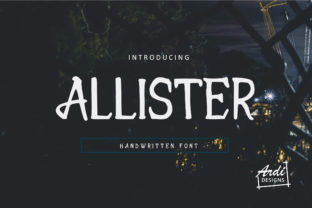
There’s something oddly satisfying about opening a blank brand board and staring at it for a few minutes. You know the feeling—like you’re about to start a creative project, but you’re also waiting for the right font to click. That’s when I pulled out Allister, a cute and casual serif font that immediately felt like a good fit for the mood of the project.
A Font with Personality
Allister is more than just a typeface; it’s a personality. With its rounded serifs and soft curves, it exudes warmth and approachability. It feels like the kind of font that would be found on a handmade greeting card or a cozy boutique sign. The overall aesthetic is friendly, almost like a handwritten note that’s been carefully styled. It’s not too bold, not too playful, but just right for a wide range of creative applications.
What stands out most is how versatile Allister is. It works well as a headline font, but it also holds up in body text when used in moderation. Its structure is clean enough for professional use without losing that casual charm. I tested it on a logo draft for a local café, and it brought a sense of warmth that matched the brand’s vibe perfectly.
Testing Allister in Real Design Work
I used Allister in several design scenarios to see how it performed. First, I tried it on a logo concept for a small skincare brand. The font added a touch of elegance while keeping the design light and inviting. It worked well with the brand’s color palette, which was soft pastels and earthy tones. The result felt cohesive and authentic.
Next, I placed Allister on a packaging mockup for a handmade soap line. The font’s friendly feel complemented the artisanal nature of the product. It looked great on labels, especially when paired with simple illustrations. However, I noticed that at smaller sizes, the serifs could become a bit cramped. This isn’t a deal-breaker, but it’s something to keep in mind if you’re using it for detailed product labels.
I also tested it on a social media layout for a craft blog. The font’s readability in both print and digital formats made it a solid choice for Instagram posts and blog headers. It maintained its character even when scaled down, which is important for social media where text often appears in smaller sizes.
Font Pairing and Brand Identity
When it comes to font pairing, Allister is a great candidate for creating contrast. I paired it with a modern sans-serif font like Montserrat for a café identity project. The combination worked well because the casual serif provided a human touch, while the sans-serif offered a clean, contemporary edge.
For a creative studio identity, I used Allister as the primary font alongside a script font for headings. The contrast between the two created a dynamic visual hierarchy that helped guide the viewer’s eye through the design. It’s important to balance the use of Allister so it doesn’t overpower other elements in the design.
In terms of brand identity, Allister can help create a consistent visual language. Whether you’re designing a business card, a website header, or a poster, the font’s friendly nature makes it easy to integrate into various design assets. It adds a personal touch that can make a brand feel more relatable to its audience.
Limitations and Considerations
While Allister is a great choice for many projects, it’s not without its limitations. For instance, it may not be the best option for long body text or formal corporate branding. The casual feel of the font can sometimes make it feel less professional in certain contexts. If you’re working on a project that requires a more serious tone, consider using Allister as an accent font rather than the main typeface.
Another thing to keep in mind is readability at smaller sizes. While it performs well in most situations, there are cases where the serifs might become too dense. Always test the font in different sizes and formats before finalizing your design.
Also, don’t forget to check the commercial font licensing before using Allister in client work. Depending on the project, you may need to purchase a license or use a font that supports commercial use. This is especially important for packaging, websites, and print-on-demand products.
Final Thoughts on Allister
Allister is a delightful serif font that brings a friendly and approachable vibe to any design project. Its versatility makes it suitable for a wide range of applications, from logos and social media graphics to packaging and editorial design. Whether you’re a graphic designer, a small business owner, or a hobbyist, Allister can add a nice touch to your creative work.
Ultimately, the key to using Allister effectively is understanding its strengths and limitations. When used thoughtfully, it can enhance brand perception, improve readability, and create a strong visual identity. So next time you’re working on a design project, consider giving Allister a try—it might just be the font you’ve been looking for.